
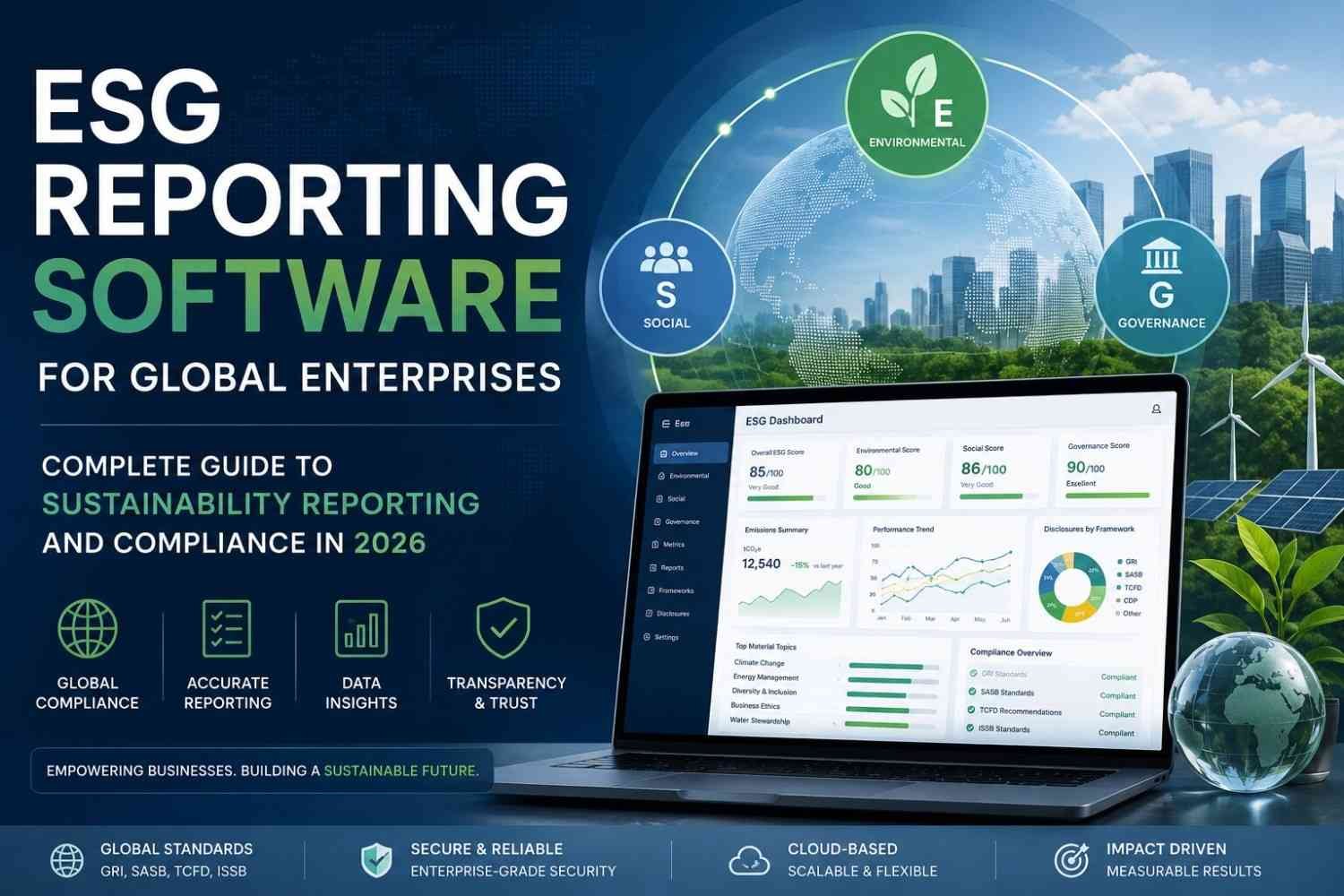
Environmental, Social, and Governance (ESG) reporting has become one of the most important priorities for enterprises worldwide. Investors, regulators, customers, and stakeholders increasingly demand transparency regarding environmental impact, sustainability initiatives, corporate governance practices, and social responsibility programs.
What Is ESG Reporting Software?
ESG Reporting Software is a specialized technology platform designed to help organizations manage sustainability and compliance reporting requirements.
The software enables enterprises to collect ESG data, monitor sustainability metrics, track carbon emissions, generate compliance reports, measure ESG performance, manage environmental risks, and support regulatory reporting. Instead of relying on spreadsheets and manual processes, businesses use ESG Compliance Software to automate reporting workflows and improve data accuracy.
Why ESG Reporting Matters in 2026
Global regulatory requirements continue to expand. Organizations face increasing pressure from investors, regulators, customers, and financial institutions. Strong ESG performance can positively influence brand reputation, investor confidence, and long-term business growth.
Key Benefits of ESG Reporting Software
1. Improved Regulatory Compliance
Helps organizations comply with sustainability disclosure requirements, carbon reporting regulations, environmental standards, and corporate governance requirements through automated reporting.
2. Better Data Accuracy
Modern Sustainability Reporting Platforms provide automated data collection, data validation, centralized reporting, and real-time monitoring to improve reporting reliability and audit readiness.
3. Enhanced Investor Confidence
Demonstrates transparency, accountability, risk management capabilities, and long-term sustainability strategies.
4. Improved Risk Management
Helps identify, monitor, and mitigate environmental, regulatory, supply chain, and governance risks.
Core Components of ESG Reporting
Environmental Reporting
Focuses on carbon emissions, energy consumption, waste management, water usage, and environmental impact. Carbon Reporting Software plays a critical role here.
Social & Governance Reporting
Covers employee wellbeing, diversity, workplace safety, board oversight, risk management, and ethical practices.
AI and Automation in ESG Reporting
AI-powered ESG software can automate data collection, identify reporting gaps, detect anomalies, generate predictive insights, and improve reporting efficiency.
Cloud-Based ESG Reporting Platforms
Cloud-based ESG software offers scalability, accessibility, lower costs, and continuous updates to stay aligned with changing regulations.
ESG Reporting Trends for 2026
- AI-Powered Sustainability Reporting
- Carbon Accounting Expansion
- Integrated ESG Platforms
- Real-Time Sustainability Monitoring
- Climate Risk Reporting
Frequently Asked Questions
What is ESG Reporting Software?
ESG Reporting Software helps organizations collect, manage, analyze, and report environmental, social, and governance performance data.
Why is ESG reporting important?
ESG reporting improves transparency, supports compliance, enhances investor confidence, and strengthens risk management.
What is Carbon Reporting Software?
Carbon Reporting Software helps organizations measure, track, and report greenhouse gas emissions and carbon footprints.
Conclusion
ESG Reporting Software has become an essential technology investment for enterprises seeking greater transparency, stronger compliance, and improved sustainability performance.
By combining ESG Compliance Software, Carbon Reporting Software, Environmental Compliance Software, analytics, automation, and cloud-based scalability, organizations can streamline reporting while supporting long-term business objectives.
As sustainability regulations and stakeholder expectations continue to evolve, ESG reporting platforms will remain a critical component of enterprise governance and risk management strategies throughout 2026 and beyond.